Canine Influenza

The dog flu – what is it, how does it happen, & what can you do?
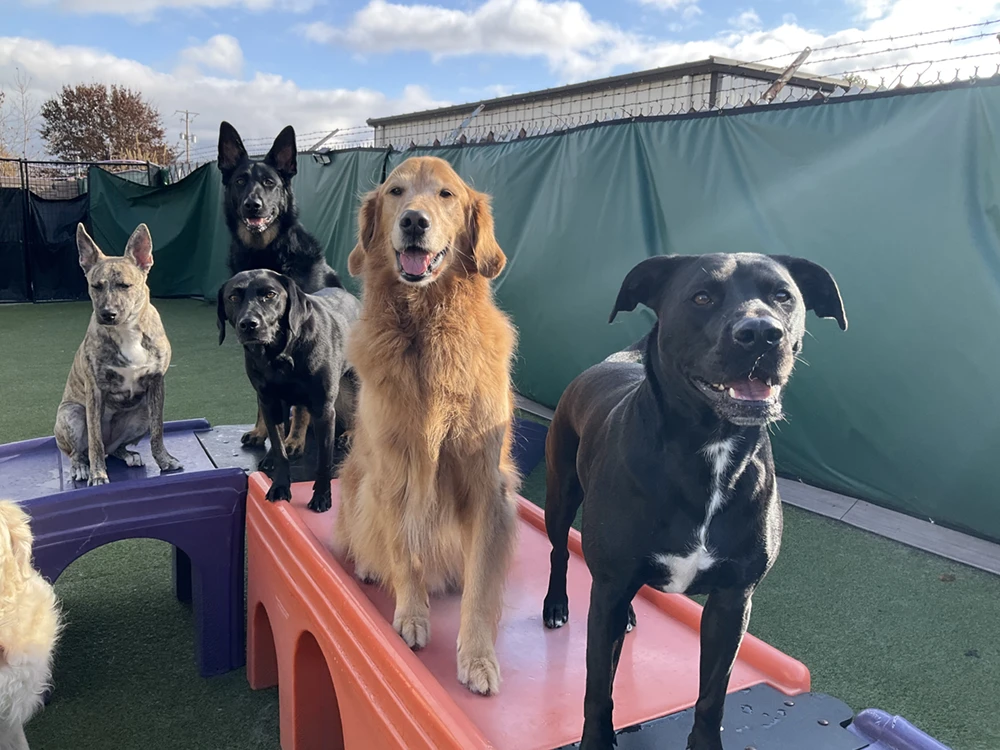
Canine influenza, also known as dog flu, is a highly contagious respiratory disease that can affect dogs of all ages, breeds, and health statuses. It is especially dangerous for senior dogs, puppies, and dogs with health problems. It is caused by the influenza virus, which can be spread through direct contact with an infected dog or with contaminated objects such as food and water bowls, toys, and bedding. Any dog coming in contact with another dog is at risk including those visiting dog parks, groomers, socializing with neighborhood dogs, or going to a pet care facility. It is readily transmissible when a dog barks, sneezes, or coughs.

Dogs with influenza are most contagious before they show any symptoms of illness making it difficult to determine if a dog is infected with the virus.

To make matters worse, twenty percent of infected dogs never show symptoms but are still contagious. The virus can live on hard surfaces for up to 48 hours, 24 hours on clothing or bedding, and 12 hours on skin. 


The incubation period lasts 1 to 3 days. Depending on the flu strain, Dogs can spread the infection for up to 10-24 days. The symptoms of canine flu are similar to those of human flu. The most common symptom is coughing which can last up to 21 days. Additional symptoms include sneezing, fever, runny nose, lethargy, and loss of appetite.

In some cases, dogs may exhibit more severe symptoms such as difficulty breathing and may go on to develop pneumonia, which can be life-threatening if left untreated.

Prevention is crucial when it comes to canine flu. Vaccinating your dog is the most effective way to prevent the disease. There are currently two canine flu vaccines available: one for the H3N8 strain and one for the H3N2 strain. It is recommended that dogs receive both vaccines for full protection. However, at the time of this writing, there is a dog Flu Vaccine shortage in the United States.
In addition to vaccination, there are other steps you can take to prevent the spread of canine flu. If your dog is sick, keep them away from other dogs. If you encounter an infected dog, wash your hands thoroughly and change your clothes before interacting with your dog. Clean and disinfect any objects that may have come into contact with an infected dog.

To combat infectious diseases including Canine Flu, Pinnacle Pets has stringent policies and procedures in place to mitigate contagion including: 

  • Oversized HVAC system to pull in fresh air from outside with multiple air exchanges per hour;
  • Ultraviolet lights in our ventilation system to kill airborne organisms;
  • Veterinary hospital-grade disinfectants to sanitize our floors, kennels, play equipment, and other hard surfaces;
  • Cleaning protocols for sanitization of indoor play areas and boarding suites;
  • Veterinary standard vaccination policies; 
  • Sanitization of outdoor as well as indoor play areas;
  • Sanitizer rinse for all dishes and toys to kill any remaining bacteria or viruses;  
  • Policies barring dogs exhibiting signs of illness into our facility; and,
  • Policies to immediately isolate any dog exhibiting signs of illness from other dogs;

If you suspect that your dog has canine flu, it is important to consult with a veterinarian for proper diagnosis and treatment. Because Canine Influenza’s symptoms are similar to other viral illnesses, testing is required to determine if it is the flu or another disease such as Bordetella. Treatment may include supportive care such as fluids and rest and antiviral medications or antibiotics for complications such as pneumonia.

The dog flu is a serious disease that can affect any dog. However, with proper prevention measures such as vaccination and good hygiene practices, you can help keep your dog healthy and prevent the spread of the disease. If you have any concerns about canine flu or your dog’s health, consult with a veterinarian for guidance and advice.
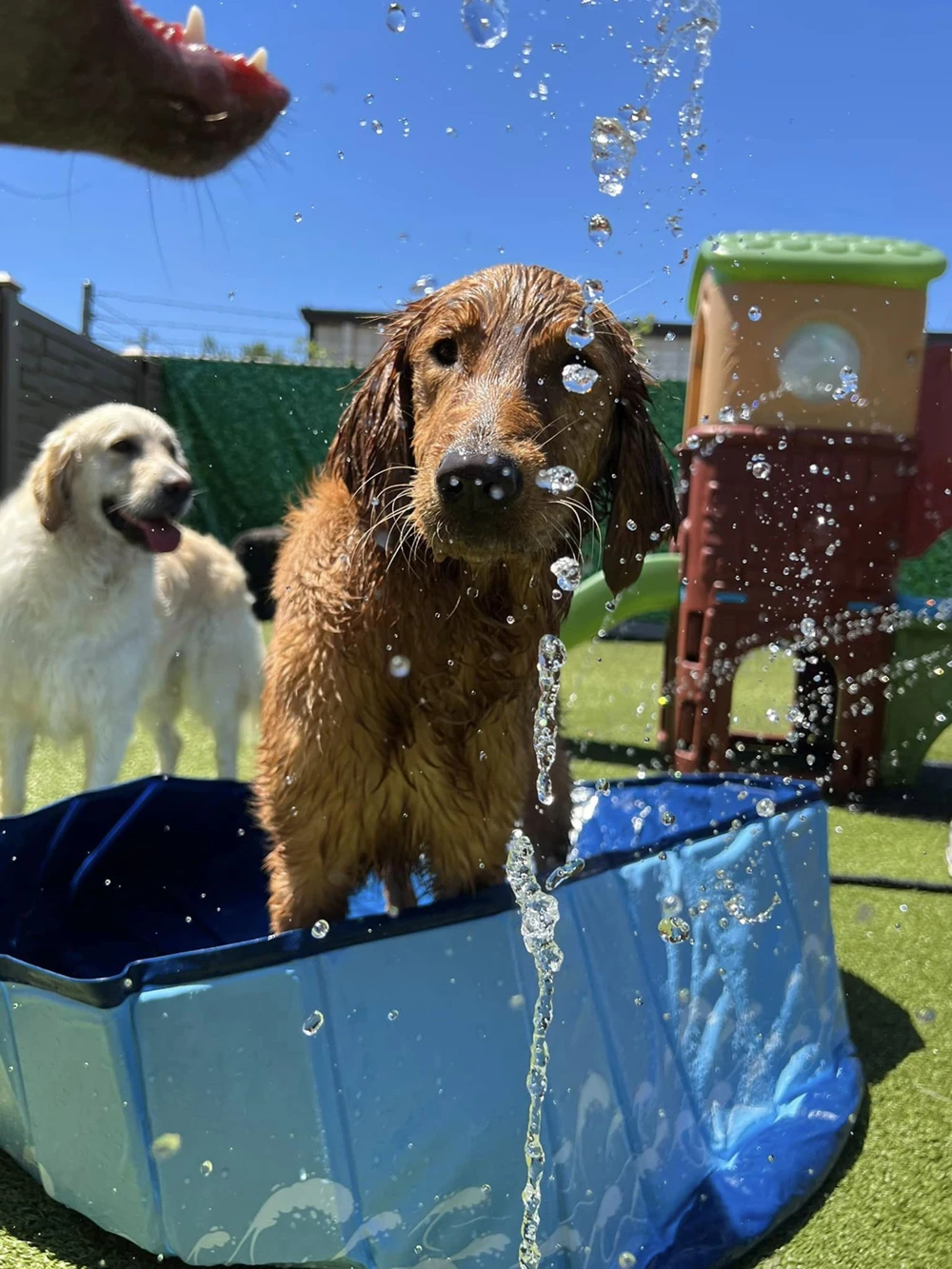
Water play

Mild to Moderate Physical Activities

The encouraging news is that alleviating boredom doesn’t have to be physically demanding to be effective. This is especially helpful for older, medically frail, or low-energy dogs. Engaging in light (non-strenuous) activities with your pup provides mental exercise that challenges and tires their brain.  

You can do a few simple things to keep your pet engaged without spending much time. One idea is to periodically rotate their toys. After being stored for a while, each toy will feel new and exciting again. 

Another fun activity is to stage a scavenger hunt by hiding small treats or toys around the house. This can turn into an enjoyable adventure for both you and your furry friend.

If the weather permits, consider engaging in “scent walks”. The ratio of a dog’s to a human’s olfactory capabilities is 10,000 to 100, 000 times stronger than a human’s. Dogs use their nose to explore and understand their world. A scent walk differs from regular walks in that the dog is encouraged to use their nose to explore their surroundings at their own pace and direction (on leash, adhering to safety/social limitations, including but not limited to busy streets or the neighbor’s prized garden gnome). 

Older, smaller, or disabled pooches that are beyond their leisurely strolling days may appreciate car rides around the neighborhood, countryside, or local park.  Even in the years when a dog’s physical abilities fade, their delight and gratification from the sights, sounds, and smells of different environments remain intact. It’s always considered a bonus day if there is a ‘pup-cup’ at the end of the ride.

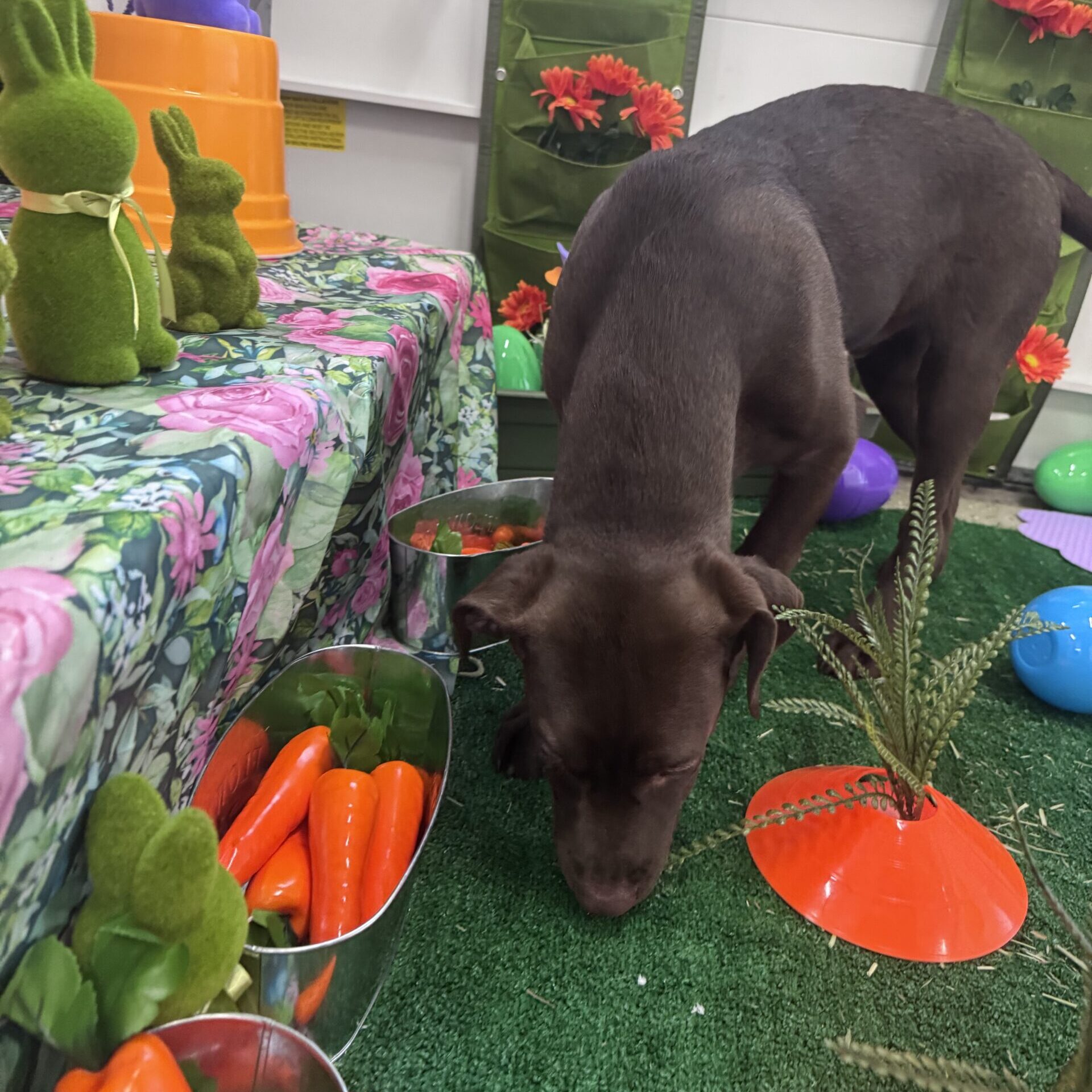
Another enjoyable activity (and great photo opportunity) is the classic “bobbing for apples”. Understanding that if you, like me, call Ohio ‘home’ at this time of year, it is very likely frigid in your backyard during the winter. An apple bobbing hack is to set up the fruit-drowning operation in the bathtub/shower.  Grab a large plastic bowl (preferably with a wide base) or a bucket, and place it in the shower or bath. Fill the vessel with cool to lukewarm water, then add the apples (cored and peeled). If preferred, chunks of watermelon, raw carrots, blueberries, cut-up bananas, cucumber slices, strawberries, or other dog-friendly fruits and vegetables can be used. Some vegetation will sink; some will float. Which one does your pup like best? Get your camera ready for some hilarious action. 

Additional ideas for mental stimulation when you can’t get outside include using slow feeders, frozen treats/Kongs, and puzzle games (See DIY ideas below).

Higher Energy Activities

Canine companions with higher physical activity needs may enjoy stair sprints using a laser pointer to chase or a game of Tug-of-War with an old knotted T-shirt. 

Hunting breeds (Retrievers, Pointers, Spaniels, Hounds, Beagles, etc.) are especially fond of the game of fetch. To play, place a tennis ball in an old sock and toss it down a hallway for retrieval (stairs work well too). 

Herding breeds (Corgis, Collies, Shepards, Aussies, Sheep Dogs, etc.) may enjoy a herding ball to maneuver about the house. Herding balls come in various sizes and are available in many pet stores or online. 

Don’t forget you can get involved in the fun too. Remember the game, Hide-and-Seek, from childhood? Guess what, dogs love it as well!! Have someone hold onto your pup in a room while you go and hide. When ready, have your best buddy come ‘find’ you. 

Tug-of-War can be a fun way to bond, release energy, and satisfy the “prey drive.” That said, if done incorrectly, it could harm their teeth or inadvertently cause behavior problems. Check out https://www.akc.org/expert-advice/lifestyle/is-tug-of-war-bad-for-dogs/ for further information and safe play guidance. 

Hawk 1

Not all dogs are inclined to socialize with other dogs, but if your pup is a ‘social butterfly’, consider arranging ‘play-dates’ with other dogs*. Consider the following recommendations for optimal matchmaking when choosing a playmate for your pup. Both dogs should be close in age and size, with similar play styles (e.g., roughhousing vs. gentle play). It is crucial that playdates are supervised at all times. Often, body language is the first clue that things are not going well between “friends,” and it is time to separate to keep everyone safe and happy.

Knox

DIY Toys/Puzzles **

Many dogs enjoy brain teasers, which serve as great distractions, but they can quickly get expensive. Luckily, there are some Do-It-Yourself (DIY) toys and puzzles that are easy to construct with inexpensive materials found around the house. 

Busy Box: Find a cardboard box and fill it with crumpled up paper, cardboard, paper towel rolls, smaller boxes, clean rags, or other ‘safe’ disposable items that your dog can tear into. Sprinkle some treats (or plain kibble) in the box. Let your dog rummage through the box to find the delectable nibbles. This easy build simulates natural foraging behaviors in the wild.

Tubular Fun: A quick and easy game starts by placing a few treats inside a toilet paper or paper towel cardboard tube, then folding the ends inwards to close. Allow your pup to figure out how to access the tasty morsels inside.

Simple Snuffle-Mat: Grab an old towel and some treats. To begin, lay the towel on the floor and scatter some treats across it. Then, fold, roll, or knot the towel to contain the treats, creating a challenging puzzle that rewards them for their efforts. This also works well with their kibble to slow down dogs who inhale their meals. Check the internet for images of various towel-folding techniques to increase difficulty. Generally, the looser the roll, and the bigger the treats, the easier the game. To increase the challenge, use smaller treats and a tighter towel wrap. For the super motivated, you can even tie a cord or strip of cloth around the towel roll to add to the excitement. If you are crafty and have some extra time, you can make more elaborate snuffle mats using a rubber pad and a yard of fleece. See the Animal Humane Society web page for directions. https://www.animalhumanesociety.org/resource/how-make-snuffle-mat#:~:text=One%20yard%20of%20fleece%20fabric,at%20least%20two%20different%20colors.) 

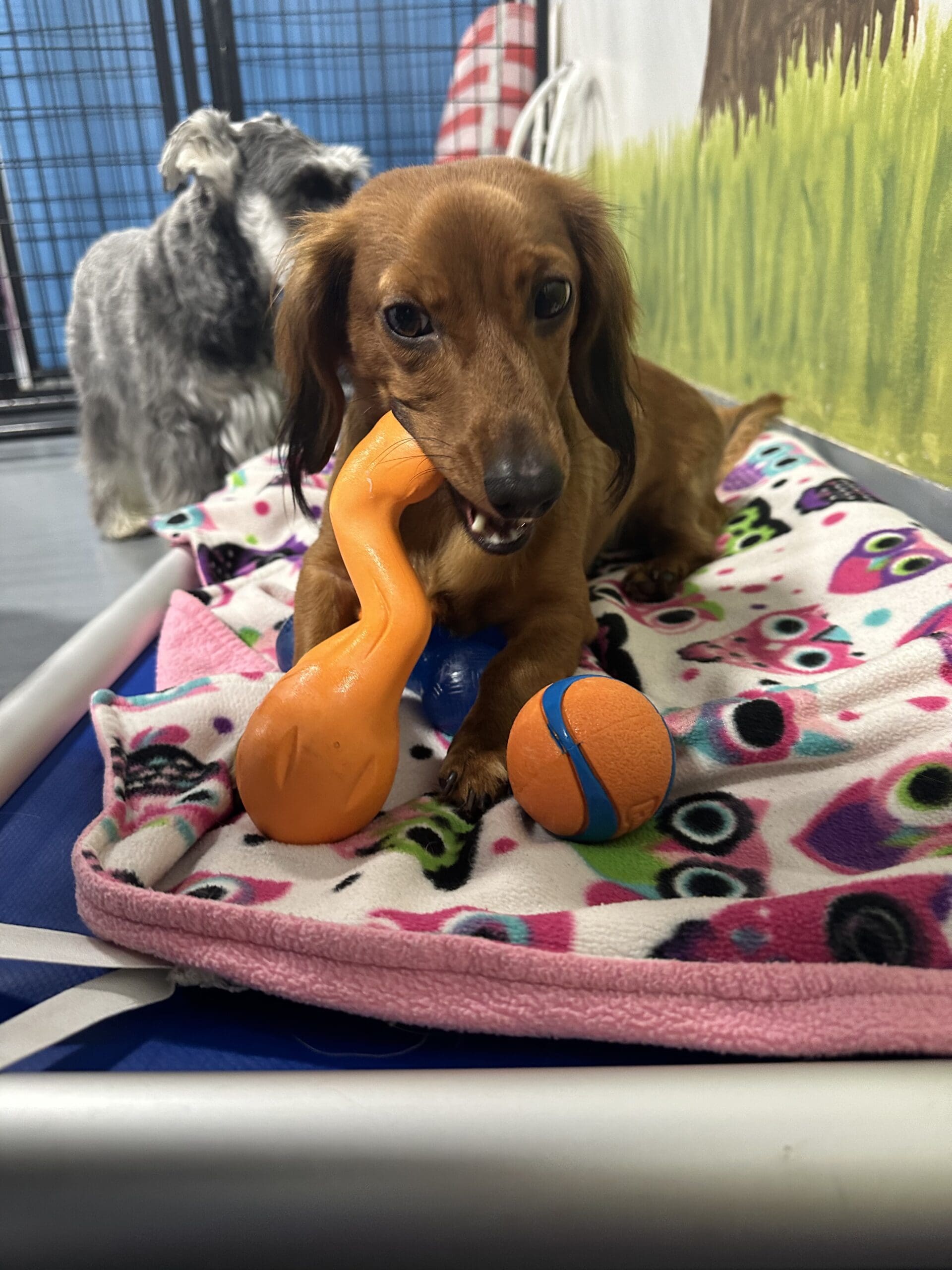
Squeaker Toys: If your dog loves squeaker toys, as my dog does, and you appreciate frugality, then I have four words for you. Dog Toy Squeaker Replacement. Over the years, I have spent unmentionable amounts of money on soft toys (stuffed and unstuffed) for my dogs to joyfully destroy. The torn carcass is usually collateral damage, resulting from the dog’s innate desire to dig out the squeakers while producing that hapless sound associated with a fading wild animal. At last check, one could purchase 50 squeakers online for less than ten dollars. These can be stitched back inside previously ravaged stuffed pet toys for pennies on the dollar. Another option is to throw a couple of squeakers into a partnerless sock and securely tie off the end. If your dog is anything like mine, they likely won’t notice or care that their new ‘squeaky toy’ is missing eyes and fur. If your furry pal prefers the stuffed version of the ‘squeaky toy’, you can purchase a bag of fluff at your local hobby or discount store.

Crinkly Toys: Create fun and entertaining toys using empty water bottles. Construct a “crinkly” toy using an empty water bottle in an old sock. Another use for discarded water bottles is to create a simple rolling treat dispenser. To craft this, remove the label from the water bottle and discard the cap. Place small treats or kibble inside, then let your pup roll it around the floor to release the treats. Using soft treats makes it easier to adjust their size by cutting them smaller as needed.

Tug Toy: Craft a quick and easy tug toy using an old T-shirt and a pair of scissors. Begin by cutting off the sleeves. Next, cut the material into strips and braid them together. Tie a knot at each end to prevent unraveling. Enjoy playing tug-of-war or fetch with your furry friend

Puzzle Toy: Fashion a puzzle using an old muffin tin and a few tennis balls. Place a few small treats in some of the muffin tin holders. Cover treat-filled and empty cup holders with tennis balls. Allow your pooch to sniff out the treats and remove the tennis balls to access a yummy snack. At the beginning, you may want to swap out the tennis balls for something lighter (like wadded-up paper balls) to cover the treats until your pup gets the hang of it.

Practice Training Commands

Teaching your pup some tricks is a fun activity that you can both enjoy and offers additional opportunities to exercise their brain. The bonus is that these playful antics can be great for showing off your fantastic pup at your next dinner party!

Start with simple tricks like sit, down, spin, shake, stay, hand-to-nose targeting, and how to fetch a specific named toy. After accomplishing the basics, you can advance training to include: play dead, spin, balance a treat on their nose, weave between your legs, crawl, back up, bow, or even put their paw over their eyes. 

Break down the tricks into simple steps and use small, high-value rewards. Keep training sessions short, lasting between 5 and 15 minutes, aiming for once or twice a day, depending on your dog’s attention span. This will help keep your dog happy and engaged. You can find additional resources for DIY trick training online. One option is to hire a professional trainer to help you and your dog start your training journey on the right foot.

On a side note, dogs are food-motivated to different degrees. Consider yourself lucky if your dog thinks he hit the lotto with a raw carrot.  Some more discerning pups barely raise an eyebrow at a grilled steak with lobster topper. If your furry friend is of the latter orientation, you may need to experiment or get creative with the treats that make your pup pounce.

Day stays

Conclusion

When it’s cold outside and you can’t take your pet out for exercise as often as you’d like, there are still ways to keep them mentally engaged. A range of simple games and high-energy activities, along with toys, can help them release pent-up energy, reduce destructive behaviors, prevent depression, build their confidence, strengthen the bond with your furry companion, and break the tedium of the winter months. 


*For the well-being of your pet, ensure that their play date is free of disease/parasites (i.e., fleas, ticks, worms, skin infections, etc.) and all their vaccines are up to date.

**Always supervise your pet when using both DIY and commercially available entertainment products.